In today's dynamic world, controlling risk exposures is crucial. That's why businesses develop new risk management programs to support risk management strategies and mitigate risks. Captive insurance companies have become a good risk-control solution, enabling the development of tailored insurance products and policies.
In this brief guide, you will learn what a captive insurance company is, what types of coverage it may provide, what software it uses, and what advantages it brings.
Learn more
Captive insurance companies and captive management companies use either end‑to‑end platforms, niche software, or modules for specific tasks. Whether the software is a core system or a captive‑focused system, it may include the following modules:
Manage the full policy lifecycle, starting from rating and issuance and ending with endorsements and renewals.
Assess risks, calculate premiums, automate intake submissions, perform risk scoring, handle referrals, and more.
Identify and mitigate various risks, helping captives make better underwriting decisions.
Control the total cost of business risks, reduce claim costs, and speed up case processing and closure.
Support underwriting, policy issuance, claims, and other processes that involve documentation.
Record premiums, fees, commissions, losses, reinsurance, and other amounts.
Calculate premiums, use rating models, issue billing documents, and track payments.
Captive insurance companies can monitor claims, losses, and trends in real time.
Ensure that non‑standard insurance processes characteristic of captives are set up in the way the company needs.
Searching for a captive insurance company definition?
We at DICEUS define a captive as a powerful solution for business owners, enabling them to manage and control business risk, reduce insurance premiums, and boost business wealth.
Think of a captive insurance company meaning as a closely held business with the sole purpose of insuring the risks of the parent company. As you know, traditional insurance can't cover all of your risks. Unlike traditional insurance companies, captives can cover all their risks and customize their coverage.
A captive insurance company insures its own business risks, its employees' risks (such as health insurance), and its affiliated businesses' risks.
You can harvest your revenue from successful claim performance rather than letting an insurance company do so. You pocket the underwriting profits generated by your account. The revenue is not taxed but reserved for future claims. In the future, as revenue grows, you can invest it as traditional insurance companies do.
Insurance coverage can be tailored to specific insurance risks. Given the variety of unique, hard‑to‑obtain risk coverages, a captive insurance company can create coverage types tailored to its specific requirements.
Instead of your claims being on the desks of hundreds of insurance companies' adjusters, where they might or might not receive attention, you have a more direct influence on your claims. You have power over the results.
You go straight to the insurance marketplace at a wholesale level, so you do not have to pay your insurance company for market access, and you may access the reinsurance marketplace just like your insurance company does to hedge your risks.
Any company owner wants to protect their business against risks. Traditionally, if you're going to do this, you buy insurance and pay premiums. However, if your claims to the insurance company are lower than the premiums paid, you lose your money.
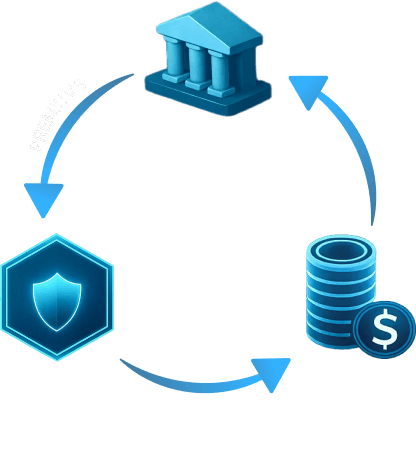
Instead of paying premiums to the traditional insurance carrier, you can insure a portion or all your risks with a captive insurance company that will pay off your claims and keep the rest of the premiums left over for the captive. The remaining sum is referred to as profits and is not usually taxed, but is reserved for future claims.
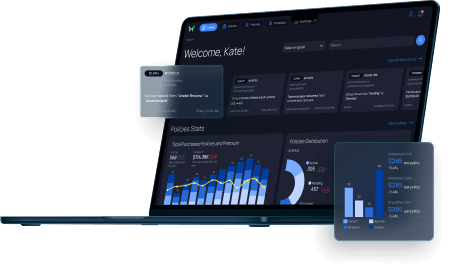
For captive insurance companies, DICEUS offers a ready‑made Policy Administration System that enables the creation and setup of tailored insurance products and policies, the customization of coverage types, the management of workflows, the creation and use of document templates, the generation of invoices, and much more.
We also offer ready‑made software solutions for underwriting, claim management, data warehousing, and customer engagement.
Learn more