-
Investment accounting
Cover insurance investment portfolios with transactions, valuation, income recognition, accounting classification, reporting, and more.
-
API and integration hub
Connect GL with policy administration, underwriting, claims, reinsurance, banking, regulatory, BI, and partner systems.
-
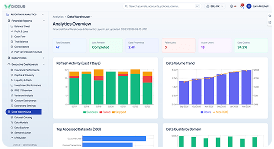
KPI and CFO dashboards
Provide executives and finance leaders with an overview of performance, risk, liquidity, reserves, capital, close progress, and operational finance health.
-
Master data management
Govern the reference data that drives the entire finance platform, from chart of accounts and entities to products, LOBs, agents, reinsurers, counterparties, and dimensions.
-
Document management
Store, classify, approve, retain, and link financial documents across journals, subledgers, treasury, regulatory reporting, audit, workflow, and security processes.
-
Intelligent automation and AI
Use AI to identify anomalies, suggest journals, explain variances, support close activities, enhance reconciliation, flag reserve risks, and assist with regulatory mapping.
-
Consolidation and group reporting
Turn entity-level accounting into group-level financial control with consolidation, eliminations, currency translation, minority interest, consolidated statements, and group reporting packages.
-
Financial close and continuous accounting
Track and control close tasks, reconciliations, accruals, bottleneck analytics, simulations, and continuous accounting processes across your organization.
-
Environmental, Social, and Governance (ESG)
Align financial and risk data with ESG reporting needs, climate exposure, sustainable investments, KPIs, disclosure packages, and audit traceability.
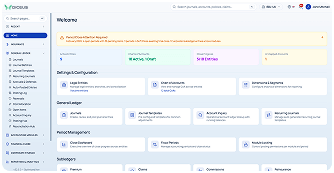
 Multi-entity general ledger
 Chart of accounts management
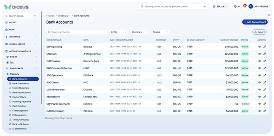
 Journal and posting engine
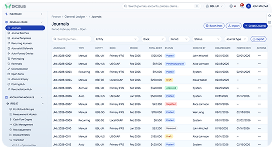
 Period management and financial close
 Premium subledger
 Claims subledger
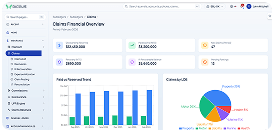
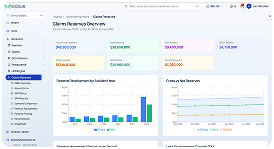
 Reserve engines
 Reinsurance financial subledger
 Financial statements and reporting
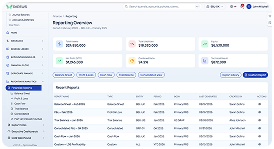
 Regulatory, tax, and IFRS 17 reporting
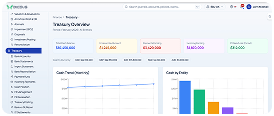
 Treasury, bank, and cash management
 Audit and compliance
 Financial warehouse and semantic layer
 Budgeting and planning
 Commission and agent settlement