MGA insurance software for delegated authority programs
Run submissions, underwriting, binding, policy administration, and carrier reporting on one record. DICEUS builds the modules a managing general agent works in, configured to how your programs are written and how each carrier wants to be reported to.
Book a demoWhat MGA insurance software does
MGA insurance software helps run a delegated underwriting business: the submissions a managing general agent receives from brokers, the appetite and referral rules it underwrites to, the policies it binds and issues, and the premium, claims, and exposure data it regularly reports back to the carrier.
It is not the same thing as a retail agency management system, which organizes a book of business an agency places with many carriers but never underwrites. It is not a carrier core system either. An MGA holds binding authority without holding the risk, so its software must support the governance, bordereaux, and commission chain that neither of the other two is built for.
Who works in it
- Managing general agents
- Managing general underwriters
- Program administrators
- Coverholders
- Specialty and E&S underwriting agencies
- Wholesale brokers running binders
- Fronting carriers overseeing delegated programs
- Chief underwriting officers and program managers
- Operations and finance teams
How a delegated program runs
- 01Submissions arrive from brokers
- 02Triage against program appetite
- 03Rate, quote, and refer
- 04Bind under delegated authority
- 05Issue, endorse, and renew
- 06Oversee claims and loss runs
- 07Report and reconcile to carriers
Do any of these problems look familiar?
Most MGAs aren’t short on submissions. They can’t turn submission flow into bound premium without hiring in proportion.
Submissions logged in a spreadsheet
Attachments opened one at a time, exposure keyed by hand, duplicate broker submissions adding noise.
Referrals bouncing through email
Authority limits live in a binder, and consistency depends on which underwriter opens the file.
Endorsements are in Excel
Policy schedules in Excel, cancellations logged separately, and version control on the document templates.
Loss runs reconciled manually
Spreadsheets from the TPA checked against your own policy view, weeks after the renewal was quoted.
Bordereaux week, every month
One file per carrier, each in its own format, on its own deadline, assembled from four systems.
Commission disputes with a top broker
Tiers, splits, and overrides recalculated by hand, with nothing to show the broker but a workbook.
Modules an MGA runs on
 Submission intake
Broker email, portal, and ACORD forms turned into structured cases.
- Attachment and document capture
- Duplicate submission detection
- Exposure data extracted to fields
- Case created and assigned
 Triage and appetite
Program rules applied before an underwriter opens the file.
- Appetite checks by program
- Automatic decline and refer paths
- Queue by jurisdiction or line
- Incomplete submission follow‑up
 Rating and quoting
Program rating applied consistently, regardless of who is at the desk.
- Rating logic held in the system
- Quote documents from templates
- Versioned quote history
- Turnaround visible per broker
 Referral and governance
Authority limits enforced rather than remembered.
- Authority matrix by underwriter
- Referral routing and sign‑off
- Four‑eyes review where required
- Carrier approval recorded
 Binding and issue
Binding gated on approvals and document readiness.
- Binder and policy issue
- Surplus lines handling
- Subjectivities tracked to closure
- Execution pack assembled
 Policy administration
Endorsements, cancellations, and renewals on one record.
- Mid‑term endorsement with premium delta
- Policy version history
- Cancellation and reinstatement
- Renewal pipeline and diary
 Claims oversight
Claims handled by a TPA or carrier, watched from here.
- Loss runs loaded and matched
- Reserve movement and large‑loss alerts
- Claims data fed back to underwriting
- Claim bordereaux prepared
 Bordereaux and carrier reporting
Premium, claims, and exposure in each carrier’s own format.
- Per‑carrier templates and periods
- Validation before export
- Delivery and acknowledgment logged
- Submission history by carrier
 Commission and settlement
Broker commission, MGA retention, and carrier net premium.
- Tiers, splits, and overrides
- Clawbacks on cancellation
- Statement reconciliation
- Payment linked to policy
 Broker management
The people who decide where the next submission goes.
- Broker records and agreements
- Submission and bind ratios by broker
- Commission terms per agreement
- Status visibility for brokers
 Carrier and capacity
Who you write on, and how much is left.
- Carrier and panel records
- Binding authority agreements
- Capacity and exposure by carrier
- Reporting cadence per carrier
 Program performance
Premium, loss, commission, and expense joined up.
- Written and earned premium
- Incurred loss by program
- Commission expense and margin
- Drill‑down to source records
Find the right solution for your needs

What happens to one endorsement
A mid‑term endorsement changes premium. Follow it through the rest of the month, and you have the whole reporting chain in one picture.
-
01The endorsement
Premium delta, policy version, and endorsement history are on the same record, so you don’t have to reconstruct anything later.
-
02Commission recalculates
Broker commission, MGA retention, and carrier net premium update together, with every tier, split, override, and source rule visible.
-
03The bordereaux run builds
Carrier, period, template, and data cut, assembled from live policy and claim records rather than from last month’s workbook.
-
04Validation runs before export
Each exception links to the exact source transaction. Fix it once at the source and re‑run, instead of patching the file.
-
05Delivery is recorded
The file goes out in the carrier’s format, with the sent date and the acknowledgment reference captured automatically.
-
06Reconciliation closes
The carrier statement is matched against what you expected, variance is driven to zero, and the payment links back to the policy.
-
07Profitability updates
Written and earned premium, incurred loss, commission expense, and margin, with drill‑down to policy, claim, statement, or ledger posting.
-
08Audit evidence exists
Run summary, mapping snapshot, exceptions log, and delivery receipt, generated by the workflow rather than gathered after the request lands.
Who gets paid what, and how do you prove it?
Commission on a delegated program moves in more than one direction. The broker earns on the policy, the MGA retains its fee, and the carrier takes net premium, and each of those is governed by an agreement with its own tiers and exceptions. When the three are calculated in separate workbooks, a broker query becomes a week of work.
Calculation
- Broker agreement rules
- Tiers, splits, and overrides
- Contingent and profit commission
- Recalculation on endorsement
- Clawback on cancellation
Reconciliation
- Expected against carrier statement
- Variance by policy, not in total
- Payment linked to the policy
- Disputes answered from source
Evidence
- Every rule applied is visible
- Journal line back to the posting
- Statement history per broker
- Export for the finance close
What changes, by role
Three roles in an MGA look at this from three different angles. Here is what changes for each one.
Underwriting
-
Appetite applied before triage
Program rules run on the submission, so underwriter time goes to risks that can actually bind.
-
One referral path, with a record
Authority limits enforced in the system rather than carried in a binder and an email thread.
-
Turnaround a broker can feel
Quote time measured per broker and per program, which is the number that decides next year’s flow.
Operations and finance
-
Bordereaux built, not assembled
Each carrier’s file generated from live records, validated before export, delivered and acknowledged on record.
-
Commission that survives a query
Every tier, split, and override visible, and the carrier statement reconciled to the policy.
-
Audit evidence already there
Run summary, mapping, exceptions, and receipts produced by the workflow, not gathered after the request.
Leadership
-
Premium growth without the headcount
More submission flow converted by the same team, which is the whole economics of an MGA.
-
Program profitability on demand
Premium, loss, commission, and expense joined up, with drill‑down to the record behind the number.
-
The operation is not one person
Appetite, rating, and commission rules live in the system, so a resignation is not an outage.
Lines and programs it handles
- Excess and surplus lines
- Commercial property
- General liability
- Professional liability
- Cyber
- Construction
- Transportation and trucking
- Workers compensation
- Specialty and niche programs
- Multi‑program structures
- Multi‑carrier panels
- Healthcare
What it connects to
An MGA sits between brokers, carriers, a TPA, and its own finance system, and ends up being the integration layer by hand. These are the connection types supported; which specific counterparties are connected is agreed during discovery.
Carriers

- Bordereaux in each carrier’s template
- Policy and exposure data exchange
- Binding authority and capacity records
Brokers

- Submission intake from portal or email
- ACORD form and document capture
- Status and document return to the broker
Claims and TPA

- Loss run import and matching
- Claim status and reserve movement
- Claim bordereaux back to the carrier
Finance

- General ledger posting and reconciliation
- Payment files and bank statements
- Commission export for the finance close
How it is launched
Implementation runs from four weeks to six or nine months, depending on the number of functionalities. Exact timelines are agreed upfront. The platform is deployed on‑premises, in the cloud, or in a hybrid setup.
-
Discovery
We explore your programs, carriers, ratings, commission agreements, and the reporting each carrier expects, then agree on what the first release covers.
-
Configuration
Programs, appetite, authority limits, document templates, and each carrier’s bordereaux format are configured against that map. Integrations are built for the counterparties agreed in discovery.
-
Migration and parallel run
In‑force policies move across, and both systems run side by side for a full reporting cycle, so one bordereaux month is produced twice and checked against the old process.
-
Go live and support
The old process is retired once the parallel cycle reconciles. Support and further releases continue under an agreed service level.
Why DICEUS
-

More than 15 years building insurance software
-

Ready‑made modules, configured rather than built from scratch
-

Solutions for carriers, brokers, MGAs, and TPAs
-

Alternative risk and captive work that shares the delegated‑authority pattern
-

On‑premises, cloud, or hybrid deployment
See one endorsement run all the way through to the carrier acknowledgment
Book a demo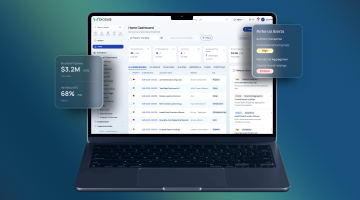
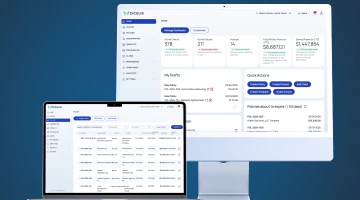
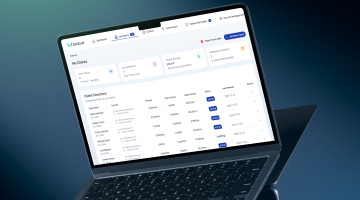
Questions MGAs ask
What is the difference between MGA software and an agency management system?
An agency management system organizes a book an agency places with carriers. MGA software runs a business that underwrites on a carrier’s behalf, so it needs binding authority, governance, bordereaux, and a three‑way commission chain.
Is MGA software the same as a policy administration system?
A policy administration system is only one part. An MGA also needs submission intake, appetite and referral control, carrier reporting, and commission settlement. Some vendors sell the policy piece and call it MGA software, which is worth checking in any shortlist.
We already run a core system from our carrier. Do we have to replace it?
No. Most MGAs keep what the carrier provides and add what the carrier doesn’t: their own submission flow, appetite rules, and reporting back. We agree on the scope in discovery.
How long does implementation take?
From four weeks to six or nine months, depending on the number of functionalities, with exact timelines agreed upfront.
Can we run one bordereaux cycle in parallel before switching?
Yes, and we recommend it. The migration step runs both processes side by side for a full reporting cycle, so we produce one month of bordereaux twice and check it before retiring anything.
What happens to our carrier‑specific bordereaux formats?
We configure each carrier’s template, period, and data cut separately because no two carriers ask for the same thing. Validation runs before export and links each exception back to the transaction that caused it.
Does it handle multiple programs and multiple carriers?
Yes. Programs are configured independently, with their own appetite, rating, authority limits, and reporting, and the system tracks capacity and exposure by carrier across the portfolio.
Where is it deployed?
On‑premises, in the cloud, or as a hybrid. The model is agreed during scoping and depends on your infrastructure, data residency, and IT requirements. The functionality is the same regardless of the choice.

