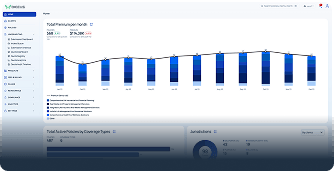
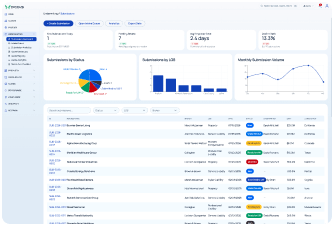
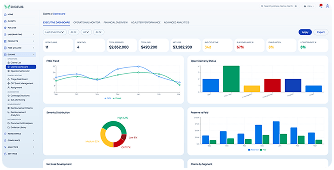
Designed for member‑owned liability insurers, the platform supports submissions, underwriting, policy administration, claims, billing, reinsurance, financial management, and member portal functions.
Book a demo
Our platform is designed for RRGs that need to:
Improve underwriting across submissions, referrals, quotes, and renewals
Replace spreadsheet‑heavy workflows with structured, auditable processes
Reduce manual work across policy administration, COIs, endorsements, and premium audit
Maintain a reliable internal view of claims, reserves, and recoveries
Support reinsurance reconciliation, bordereaux, and Schedule F reporting
Prepare board packs, audit evidence, and statutory reports faster
Give members better access to policy, claims, billing, COI, and audit information
Reduce dependency on institutional knowledge held by a few employees
Policies are maintained in Excel, while endorsements are tracked in tabs.
Submissions are received as broker emails and logged manually in spreadsheets.
Written premium increases, but the same team works on submissions and COIs.
Reports are assembled from various workbooks manually.
The RRG members expect transparent policy data, claim status, and COIs.
Audit and examination evidence are collected manually.
Quarterly and annual close means pulling data from separate workbooks and providers.
The team assembles reports by hand.
Every submission, policy, endorsement, premium audit, claim, reinsurance entry, and capital event is on one audit record. The work your team does today in workbooks and emails becomes structured, traceable, and easier to manage.
Appetite rules and referral routing for every case.
Full policy lifecycle support from issuance to renewal.
Mileage, headcount, payroll, and exposure are calculated automatically.
Treaty registers are tied to claims. Bordereaux and Schedule F from the same source data.
Intake, reserves, payments, settlements, and recoverables.
Board packs are generated from one record. Statutory evidence is queried.
Live policy schedules, COIs on demand, claim status, and audit results.
As premium, broker volume, member requests, and audit work increase, the platform helps automate processes, so the back office does not scale linearly with the book.
Appetite rules, referrals, approvals, quotes, policies, and endorsements stay connected to the same record, making underwriting consistency easier to maintain and review.
The way the RRG runs is built into the workflow, not hidden in spreadsheets, inboxes, or the memory of one or two experienced employees.
Policy changes, claim payments, reinsurance entries, premium audit adjustments, investment data, and capital movements carry traceable history, making evidence easier to find and explain.
Members and brokers get faster responses on COIs, policy details, claims status, billing, audit results, and renewals through structured workflows and portal access.
The platform can work as an operating layer around existing policy, claims, finance, TPA, broker, and reporting systems. It does not require a big‑bang core replacement.
Excel, homegrown tools, and carrier‑origin systems solve part of the problem. Our solution was developed around the whole RRG lifecycle.
The platform delivers different outcomes depending on your role in an RRG.
No, our solution is not deployed as a core replacement. The way this typically starts is with one or two workflows that take the most time. It may be a submission intake, premium audit, statutory pack, or member portal. The existing software stays in place. Once the new workflows run smoothly, the scope expands at your pace.
Smaller RRG teams get more out of this, not less. Every hour returned to the team is a bigger share of operational capacity. The decision is the same regardless of premium size: which workflow takes the most evenings today, and is it worth fixing?
Most homegrown systems do one or two workflows well and rely on the people who built them to keep them running. The question is what happens when those people move on. If your home‑built tool already handles submission intake, premium audit, claims oversight, reinsurance and the statutory pack with audit trail, you are ahead of the curve. If a few of those still depend on workbooks, that is exactly the gap we address.
No. Many RRGs use a TPA for adjudication. What our solution focuses on is the RRG's own view of each claim. The TPA relationship stays in place. You get your independent view of reserve discipline, leakage, and trend without depending on the TPA's reporting cadence.
The question is what is actually behind it. Most RRG portals are static pages with quarterly updates. The DICEUS system delivers a live view on current policy schedules, COIs on demand, real‑time claim status, and premium audit results. Members who are owners expect the same visibility they would get from a larger commercial carrier.