Alternative Risk Platform
DICEUS Alternative Risk Platform is ready‑made software for teams that administer captives, cells, programs, reciprocals, or self-insurance funds. It supports entity onboarding, bordereau intake and reconciliation, reporting, and statutory and regulatory filings across every structure you manage.
Book a demo
Built specifically for alternative risk administrators
Our risk operations platform is designed for firms that need to:
-
Onboard a new cell, program, or member without creating a new Excel workbook
-
Set your own rules for every cell, program, or account
-
Reconcile bordereau in multiple formats from multiple carriers or fronting partners
-
See loss ratio, capital, fees, and compliance status across every entity
-
Prove you’re following the rules to the carrier who gave you underwriting authority, not just to regulators
-
Keep a consistent audit trail even though every domicile and structure type has its own rulebook
-
Generate owner, participant, and carrier statements without assembling them manually
-
Track fees and premiums separately for every entity
-
Grow the number of entities under administration without growing headcount
Who can use the platform?
- Captive management firms
- Rent-a-captive and cell company administrators
- Risk retention groups (RRGs)
- Program administrators and MGA-adjacent shops
- Protected cell company (PCC) managers
- Self-insurance administrators
- Segregated portfolio company (SPC) administrators
- Group captive managers
- Fronting program administrators
- Captive owners
- Reciprocal managers (attorneys‑in‑fact)
- Alternative risk transfer (ART) administration firms
Does your team recognize these problems?
Insurance businesses that manage complex and unique risks often use software systems built for traditional insurance companies. These systems rarely meet the operating needs of an alternative risk administrator.
Onboarding a new entity in Excel
Standing up a new cell, program, or member account means creating a new Excel workbook before anything else can happen.
Bordereaux in different formats from different sources
Each carrier or fronting partner sends its own layout, and each one gets reconciled manually.
Delegated authority reporting is assembled manually
Proving underwriting and claims‑handling compliance to a fronting carrier means gathering data from several spreadsheets.
Growth means adding a new team member
Every new program or cell adds work that scales with headcount.
The audit trail lives in spreadsheets
When auditors or regulators ask, the evidence is a spreadsheet tab and the email that approved it.
Statutory variance adds work
Filings differ by structure type as well as by domicile, and there’s no single template that fits.
One reporting pack for three audiences
The audience asking for the pack may be a cell owner, a fronting carrier, or a regulator, each expecting a different view.
The homegrown system covers only part of the work
Most things still run in Excel, Outlook, or SharePoint.
How our platform can help you
Every entity you administer runs on the same record and audit trail, even though each looks different on the surface.
- New cell, program, or member onboarding handled through a simple setup instead of a new Excel
- Bordereau from each carrier or TPA mapped once into a reusable template
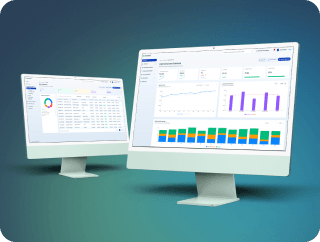
- Portfolio-level views, including loss ratio, capital, fees, compliance status, are available on demand across every entity
- Delegated-authority reporting generated from the ledger, not assembled from multiple spreadsheets
- Fee and premium runs computed automatically, tracked by status, and matched back to settlement regardless of payment method
- Compliance and filing status tracked across every domicile and structure type
- Owner, participant, and carrier statements are ready as soon as the books close
- Claims handled and paid through one workflow, whether it’s a direct claim or one you’re managing on a carrier’s behalf
Automate your entity administration. Let’s transform your manual tasks into streamlined operations.
Book a demo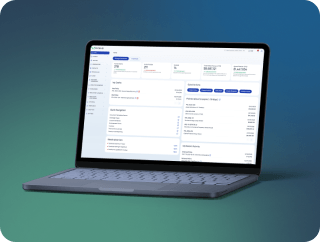
What this platform is, and which product you need
This page describes the operating layer: the records, ledger, and reporting that every structure you administer shares. It is not one of the four products you license, and it is not a policy administration system. The DICEUS Policy Administration System is the right product when you carry the risk on your own book rather than administering entities for other people.
Captive managers running policy, claims, reinsurance, compliance, and actuarial work across several entities use the Captive Management Platform. Captive owners and cell participants get their own read‑only view through the Captive Owner Portal.
Member-owned groups that also need fund, allocation, and distribution accounting use the RRG Platform. If you are still deciding whether a captive is the right structure at all, start with captive insurance software, or with what a captive insurance company is.
What your team gets with the platform
 Policy management
Manage the full policy life cycle, from issuance to renewal and closure, possible for each entity you administer.
 Products
Configure alternative insurance products and program templates once, then apply them to any cell, program, or other entity without rewriting from scratch.
 Invoicing and billing
Automatically generate invoices and monitor payments for each entity separately, reconciling them with ledger entries.
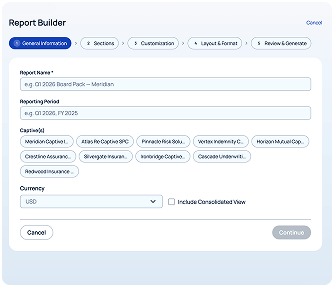
 Entity onboarding
Configure a new cell, program, or member account from a form, with rules, chart of accounts, and reporting templates carried forward automatically.
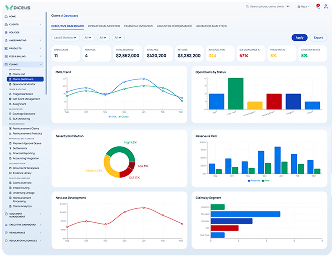
 Portfolio dashboard
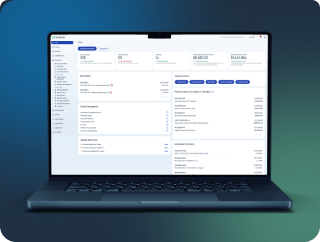
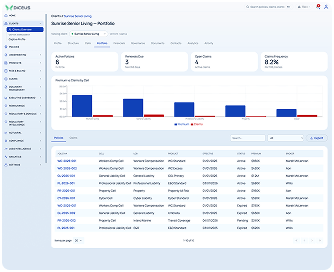
View loss ratio, capital, fees, and compliance status across every entity you administer, filterable by structure type or domicile.
 Bordereau mapping
Map each carrier or TPA’s bordereau format once, then parse, reconcile, and post new submissions in that format automatically.
 Delegated‑authority reporting
Generate the reports fronting carriers require, directly from the ledger, without manually assembling underwriting and claims‑handling data.
 Multi-entity ledger
Post fees, premium, reserves, and allocations against every entity in one ledger, each with its own configurable rules.
 Claims handling
Manage direct claims and carrier‑delegated claims through the same workflow, from intake through payment and settlement.
 Statement generation
Produce owner, participant, and carrier statements automatically at close, rather than assembling them per entity per quarter.
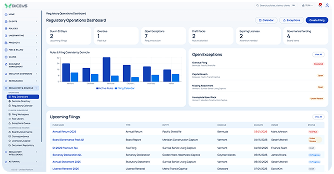
 Compliance and audit tracker
Track statutory filings and deadlines across structure types and domiciles in one calendar, with a versioned audit trail behind every entry.
 Actuarial module
Monitor the adequacy of rates, expected versus actual results, and change assumptions by product, program, or cell with complete impact transparency.
Explore every module in the DICEUS Alternative Risk Platform
Book a demoKey benefits by role
Our risk operations platform helps turn complex risk management into an automated process. Unlike legacy single‑carrier PAS systems, it is fully configurable for your workflows. The platform delivers different outcomes depending on your role in the firm.
 Executives
Turn onboarding speed into a competitive edge
Fast, standardized onboarding becomes a credibility point in RFPs and fronting-carrier conversations.
Scale without adding more headcount per entity
Bordereaux mapping and reporting are configured once per source, so the next program or cell doesn’t require the next hire.
Show carriers and reinsurers the reporting they ask for
Portfolio-level data is available on demand, supporting the credibility a partner expects before extending capacity.
 Operations
Onboard the next cell or program easily
Adding a new entity is a configuration step, measurable and repeatable.
Run reconciliation once across all entities
Bordereau, statements, and allocations follow the same mapped process regardless of source.
Answer a mid-quarter request in minutes
Client, carrier, or board requests for a statement or portfolio view pull from live data instead of a rebuild.
 Finance
Replace the Excel audit trail with one platform
Allocations and distributions post as attributable ledger entries.
Automate fee-to-cash across every entity
Fee runs, invoices, and settlements are tracked by status and matched back to the ledger regardless of payment method.
Parse each bordereau format once
New formats land in reusable mapping templates, with the audit trail attached to every entry that follows.
Find the right solution for your needs

FAQ
What are alternative risk solutions?
Alternative Risk Transfer (ART) solutions are non-traditional ways to administer risks. These risk management strategies help businesses transfer and finance risks outside the conventional insurance market. Examples of these strategies include captive insurance, risk retention groups, self-insurance, risk pooling, and more.
How is this different from a policy administration system?
A policy administration system is organized around one insurer’s own book of business. This platform is organized around clients, captives, and cells, so a policy, a claim, or a ledger entry always belongs to a named entity and carries that entity’s rules with it. That is the difference that matters at audit.
How is this different from the system we already built?
Homegrown systems in this space typically cover one or two workflows well. The gap is usually in multi-entity reporting or reconciliation when a new bordereau format shows up. The platform can sit alongside what you’ve built rather than replacing it outright.
Who runs the platform day to day after go-live?
Your own team does. Entity setup, bordereau templates, fee runs, and filing calendars are configuration screens, not development tickets, so the people who administer the book also administer the platform. DICEUS runs the implementation and configures the first entities alongside your team.
Our programs, cells, or client requirements are all different. Won’t a standard system force us into one template?
No. The platform is built around configuration per entity – not one template applied to all of them. Rules, chart of accounts, and reporting formats are set once per entity, which is the direct answer to structural heterogeneity across a book.
Can one platform cover captives, cells, and risk retention groups?
Yes. The registry handles single captives, group captives, and protected cell companies in the same structure, and a risk retention group runs on the same core with an added fund, allocation, and distribution layer. Which modules you license depends on the structure, not on which platform you are on.
How does the platform handle loss runs from a TPA or carrier?
You upload the file in Excel or CSV, pick the client, and apply a saved template that maps the source columns to the system’s own claim fields. Valid rows post as claim records, failed rows come back as a downloadable error report, and the import feeds loss ratio and retro-premium directly.
We administer twelve entities today. Where does onboarding start?
With one entity and one bordereau format. The first structure is configured end to end – rules, chart of accounts, and reporting templates – and the rest are created from it rather than built again. Mapping templates are saved per source, so the second carrier file is quicker than the first.
What happens to the Excel workbooks we run today?
They stop being the system of record. Historical files can be imported where a template exists for them, and archived files stay readable for audit without feeding live calculations. The workbooks that are really reports get replaced by portfolio views instead.


